

International Standard Petroleum Storage Tank Construction
In the energy and chemical industry, the construction of storage infrastructure plays a vital, life-blood role. However, petroleum storage tank construction is an exceptionally high-risk category. Even a minor flaw in design, material selection, or welding technique can lead to irreversible disasters involving human life, property, and the environment.
Understanding the rigorous nature of the industry, NEW TECHNOLOGY JOINT STOCK COMPANY (NEWTECH) always places safety and quality at the forefront. This article will share our internationally standardized process for fabricating and installing industrial tank systems.
1. The Deadly Risks of Substandard Tank Construction
Investors and project management boards must never compromise on quality for a lower price in this sector, as the consequences are devastating:
-
Fuel Leaks and Environmental Disasters: Poor quality welds or substandard steel will corrode rapidly, leading to toxic chemicals leaking into the soil and groundwater, resulting in massive legal penalties.
-
Extreme Fire and Explosion Hazards: The accumulation of petroleum vapors combined with static electricity or leaks can trigger catastrophic explosions, completely destroying petroleum production plants and endangering workers' lives.
-
Operational Downtime and Financial Losses: Tanks requiring constant shutdowns for maintenance disrupt the supply chain, causing severe revenue losses.

2. Strict Adherence to Technical Standards (API, ASME, TCVN)
To entirely eliminate the aforementioned risks, the tank systems at Newtech are designed and manufactured based on the strictest global and Vietnamese standards:
Design and Material Standards
-
API 650 & API 620: American Petroleum Institute standards applied to the design and construction of welded steel tanks for low or non-pressure storage.
-
ASME (Section VIII): Design standards for high-pressure vessels.
-
TCVN: Vietnamese construction and fire safety codes. The steel plate materials used are always rigorously inspected by Newtech (with full Mill Test Certificates - MTC) to guarantee tensile strength, yield strength, and chemical corrosion resistance.
Specialized Welding Techniques
Weld quality determines 90% of a tank's lifespan. Newtech applies advanced welding methods (SMAW, GTAW, FCAW, SAW) with strictly approved Welding Procedure Specifications (WPS), ensuring deep penetration and the absence of porosity or cracking defects.
3. Rigorous Pre-Handover Quality Inspection (NDT Testing)
No petroleum storage tank constructed by Newtech is permitted to be commissioned without passing the most stringent Non-Destructive Testing (NDT):
-
Radiographic Testing (RT): X-raying the internal structure of butt welds to detect hidden flaws.
-
Ultrasonic Testing (UT): Measuring metal thickness and detecting internal cracks.
-
Magnetic Particle / Penetrant Testing (MT/PT): Evaluating the surface of the welds.
-
Hydrostatic Testing: Filling the tank completely with water to test its actual load-bearing capacity, check for leaks, and assess foundation settlement before loading chemicals.
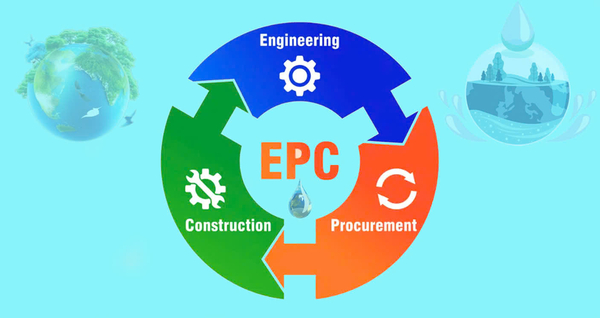
4. EPC Newtech's Oil & Gas Infrastructure Capabilities
Located in the heart of the Mekong Delta (Can Tho), Newtech is proud to be one of the few general contractors capable of executing large-scale EPC projects for petroleum production plants and storage depots.
Our strength lies in an experienced team of mechanical engineers and highly skilled welders (holding international 3G, 4G, 6G certificates). Every stage, from design, pipe spooling, and plate rolling at the workshop, to the installation of process piping and tanks on-site, is subjected to strict Quality Assurance/Quality Control (QA/QC).